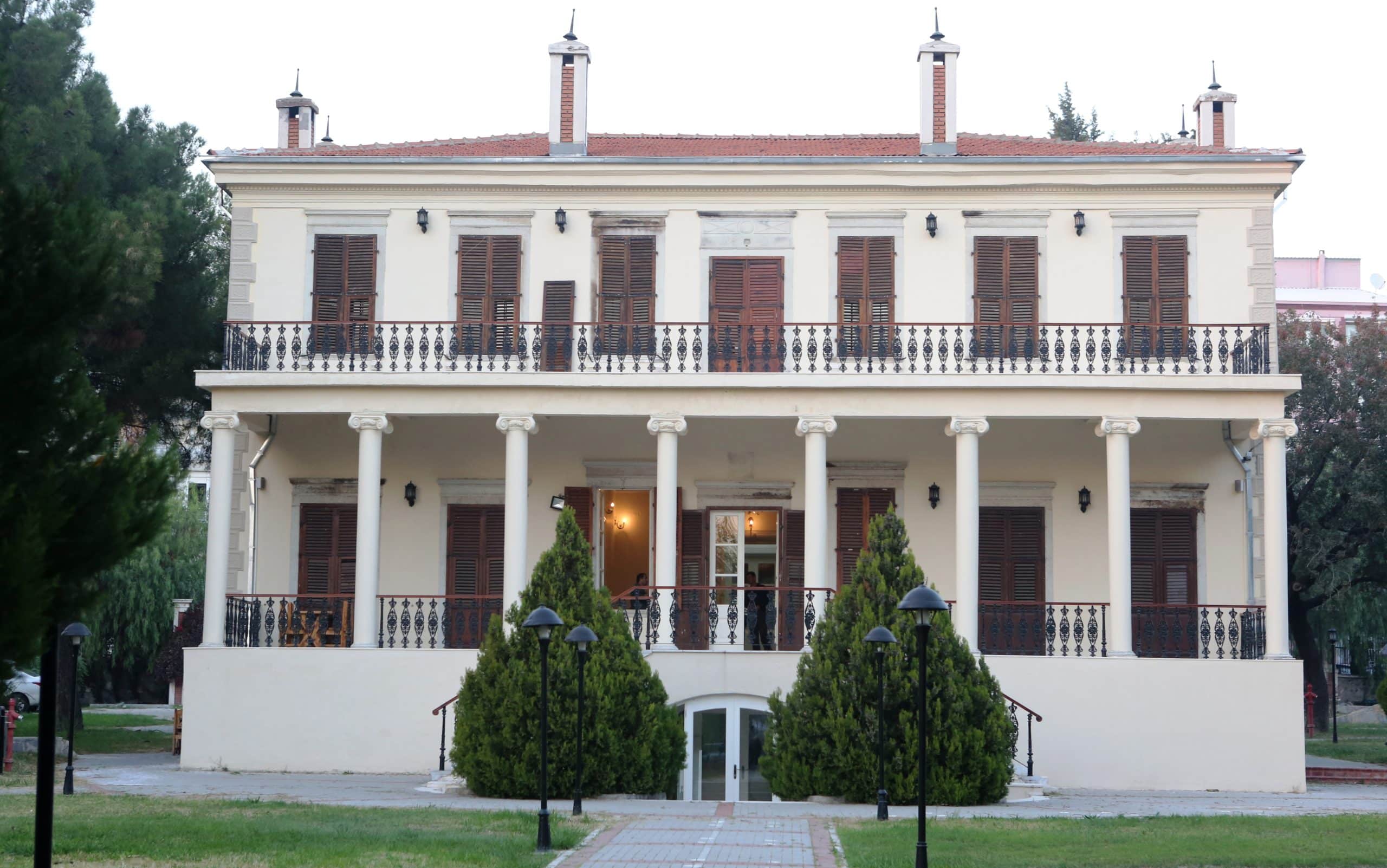
Built in 1880 by the British Edwards Family, the mansion is one of Bornova's important Levantine heritage buildings. It acquired the name "Murat Mansion" from Constantin Murat, who married Edwards's daughter Emily. Expropriated in 1980, the building was evaluated by the Izmir Metropolitan Municipality and Ege University after restoration. Today it serves as the Izmir Directorate of Surveying and Monuments.
Known today as the "Murat Mansion," this building was constructed in the late 19th century by the English Edwards family. The land on which the mansion stands was sold by James Whittall to the Edwards family in the 1820s. The family's son, Anthony Francis Edwards, was a notable figure who contributed to İzmir's modernisation; he played an active role in the construction of the İzmir–Kasaba (Turgutlu) Railway and the establishment of the İzmir Gas Company.
The building takes its name from Constantin Murat, whom Anthony Francis Edwards's daughter Emily Edwards married.
The Edwards Mansion is a two-storey building bearing the influences of English rural residential architecture.
The Edwards (Murat) Mansion is a symbol of the transformation from Levantine life in Bornova to Republican-era social institutions. Through its restoration and transfer to educational institutions, the building is not merely an architectural heritage but also an example of cultural continuity and public benefit.
Built in 1880 by the British Edwards Family, the mansion is one of Bornova's important Levantine heritage buildings. It acquired the name "Murat Mansion" from Constantin Murat, who married Edwards's daughter Emily. Expropriated in 1980, the building was evaluated by the Izmir Metropolitan Municipality and Ege University after restoration. Today it serves as the Izmir Directorate of Surveying and Monuments.